A touch to ancient cultures
Vietnam Hill Tribes & Communities | 2 weeks trip
A grand journey off the beaten track, connecting with Vietnam’s hill tribes and local communities.
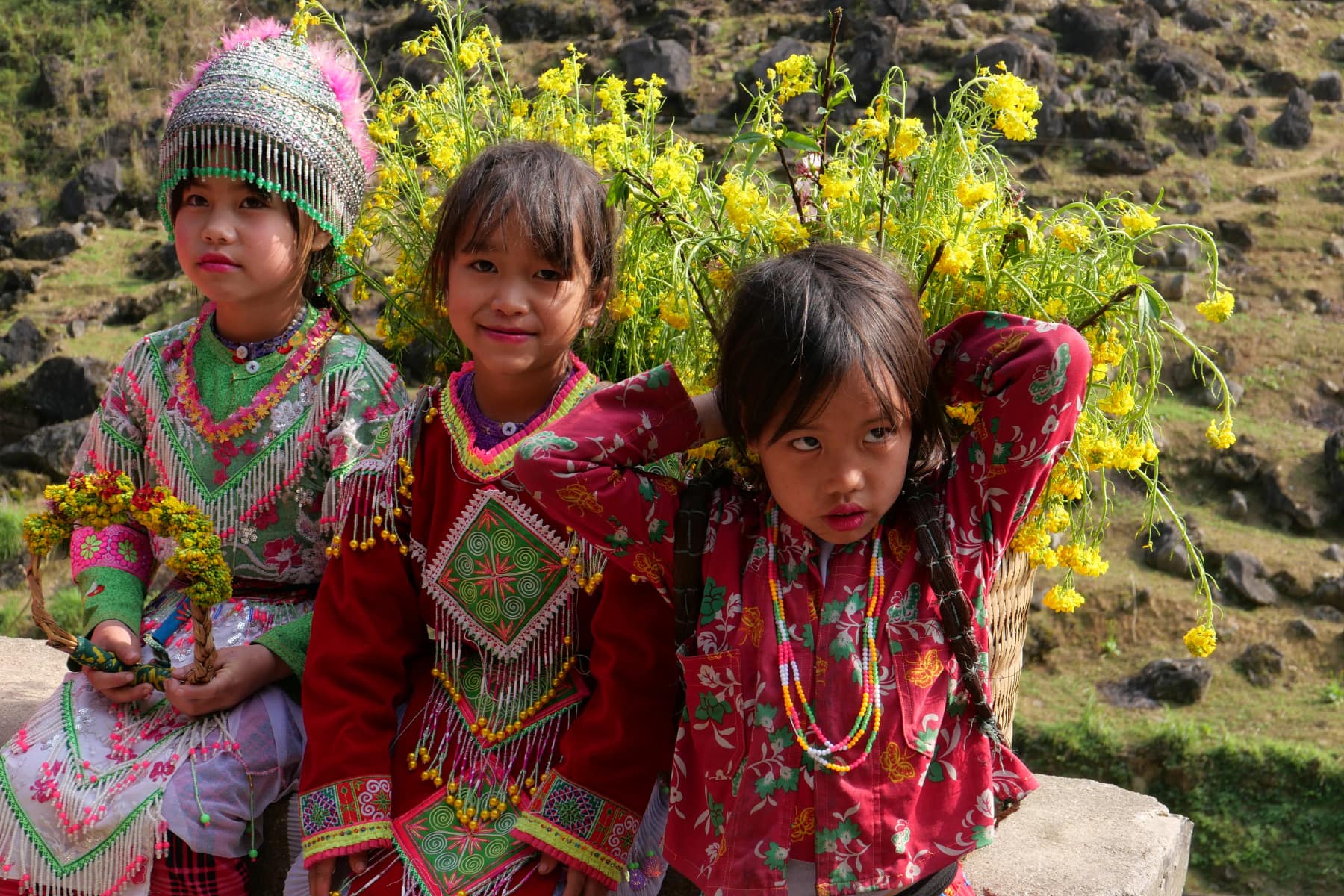
Northwest Vietnam’s beauty is not only in its scenic allure but also in the distinct culture of its inhabitants. The Hmong, Tay, Nung, Dao and many communities call this place home, and they have preserved their cultural traditions and lifestyle in harmony with nature, unaffected by modern life.
This journey forms a wide loop through the region, connecting familiar landmarks with less-travelled trails and remote mountain villages. Instead of moving quickly from one attraction to the next, we spend more time in each place, staying with local families, sharing meals and listening to the stories behind their traditions and daily lives. Each day offers space to slow down, connect and gain a deeper understanding of the region’s remarkable cultural diversity.
These encounters unfold within some of Northern Vietnam’s most impressive scenery. Walk among terraced rice fields that change colour with the seasons, climb from deep valleys towards cloud-covered mountains, and travel through tea hills, forests, rivers and limestone plateaus. By experiencing the landscape alongside the people who live within it, you will discover what makes each destination truly distinctive
What you’ll exeperience
Highlight
Where you’ll go
Routes & Destination
Places you will explore
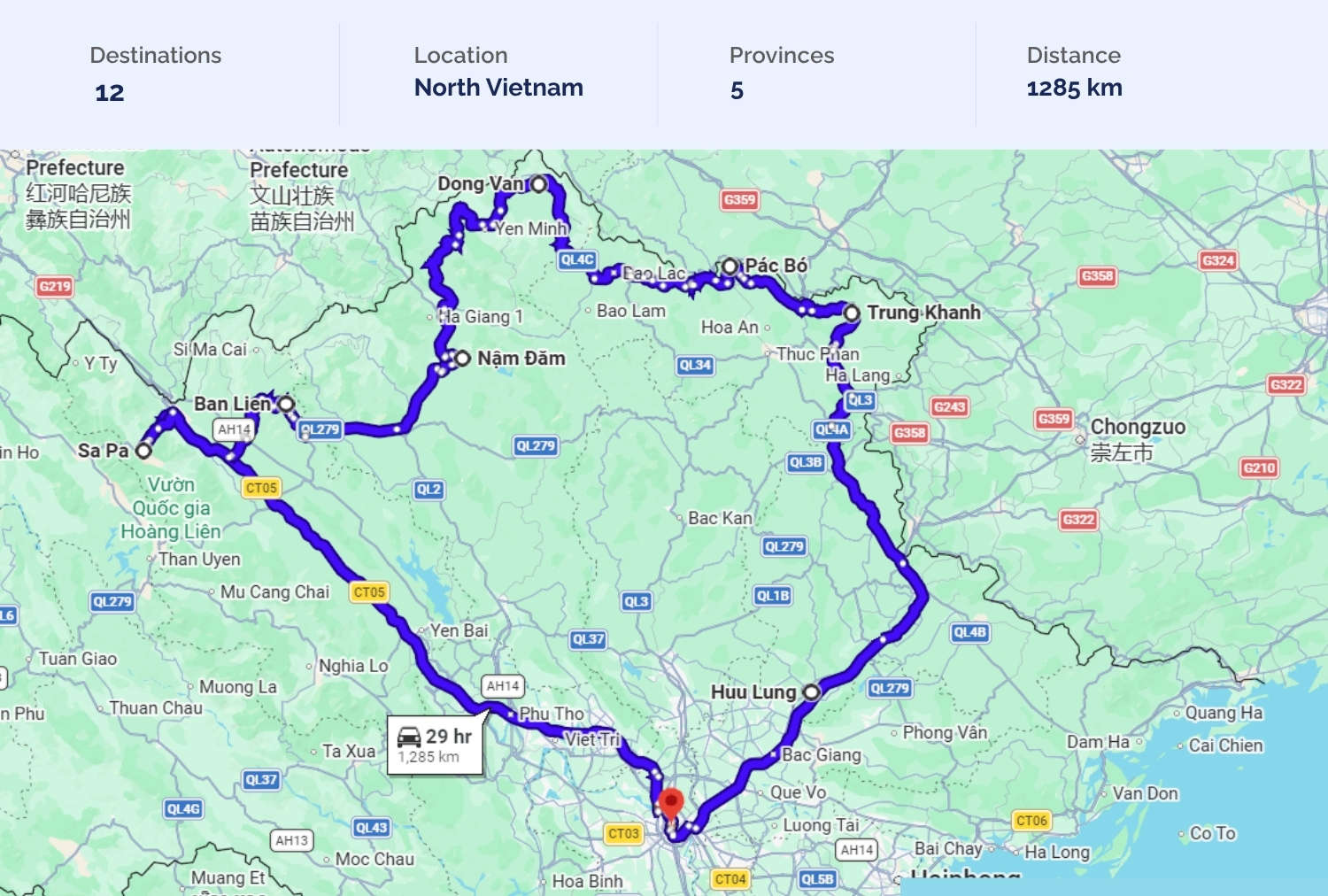
Leave the classic tourist routes behind on a grand loop through five provinces in Northern Vietnam, combining dramatic mountain landscapes with the cultural stories of local ethnic minority communities.
From Hanoi, travel through remote valleys, highland villages, ethnic markets, and spectacular mountain passes. The journey ends in Hanoi, where you can rest or continue with your next adventure. Your routes will be:
- Hanoi
- Lao Cai: Sapa and Ban Lien
- Ha Giang, now part of Tuyen Quang: Sa Phin, Nam Dam, Dong Van, and Meo Vac
- Cao Bang: Bao Lac, Pac Bo, and Trung Khanh
- Lang Son: Phia Thap and Huu Lung
Program details
What you’ll experience
Homestays and craft traditions in H’mong and Red Dzao villages
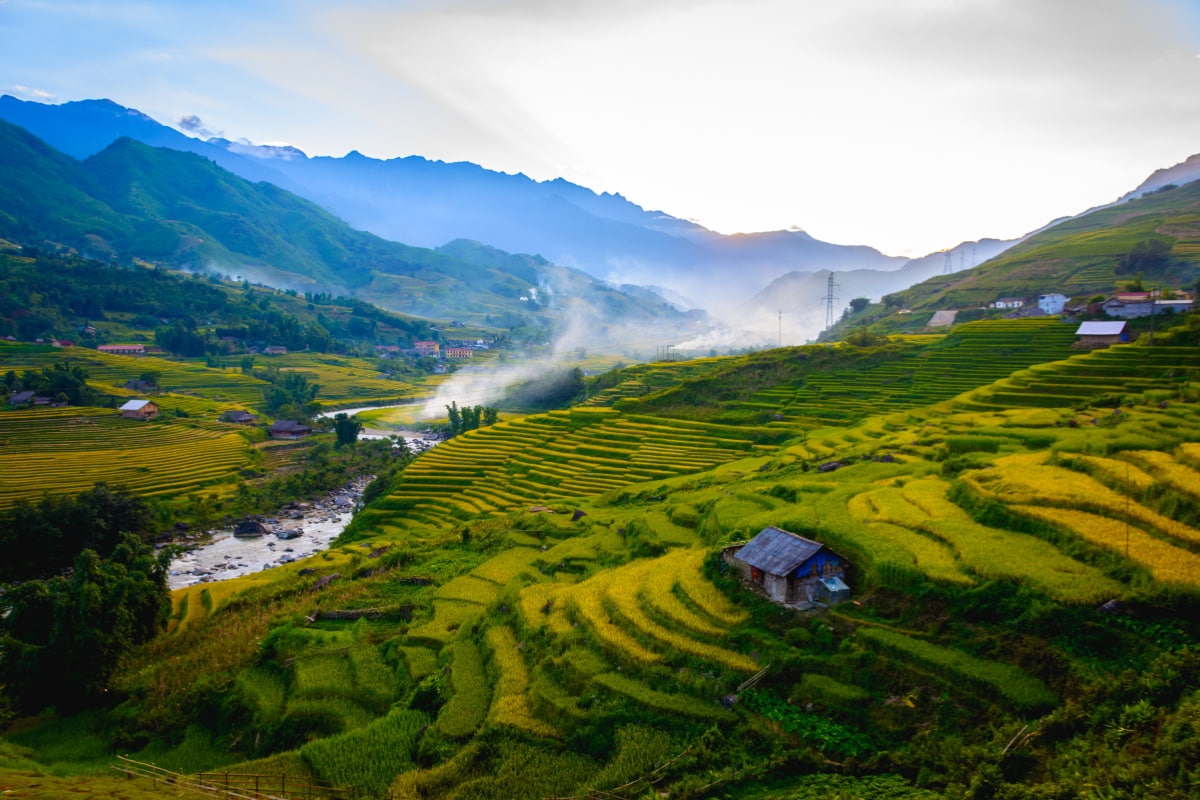
Most travellers know Sapa for its mountain scenery and rice terraces, but its cultural heritage is equally worth discovering. Beyond the busy town centre, H’mong and Dao communities continue to practise traditional cooking, herbal medicine, batik, indigo dyeing, weaving and embroidery. You will have several days to have a closer understanding of these traditions through genuine, hands-on experiences, as well as stay with local families, prepare meals together, learn directly from skilled artisans and create your own handicrafts.
The journey begins on Day 0 with an overnight train from Hanoi to Lao Cai, travelling in a comfortable private cabin. By early morning, your guide and driver will welcome you at the station and take you into the mountains of Sapa.
Walk through Suối Hồ, Má Tra and Tả Phìn, where Black H’mong and Red Dao communities have lived for generations. The experience goes beyond visiting the villages: you will enter family homes, share meals with your hosts and discover how farming, food and traditional knowledge continue to shape everyday life.
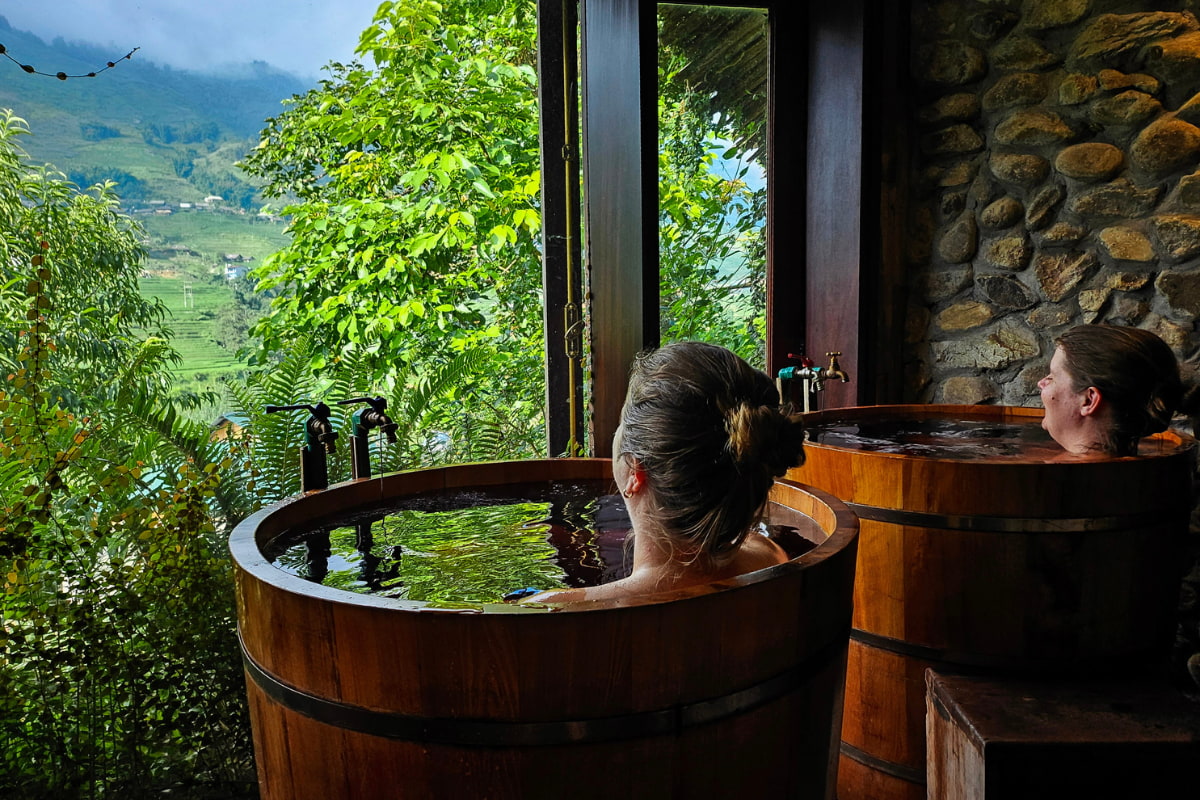
As you follow the trails through rice terraces and mountain valleys, your guide will introduce you to wild medicinal plants used by local families for health and recovery. Collect a few herbs to prepare with your hosts, enjoy a home-cooked dinner and relax in a traditional Red Dao herbal bath. Your night in a family homestay offers time to slow down, exchange stories and experience the peaceful rhythm of village life.
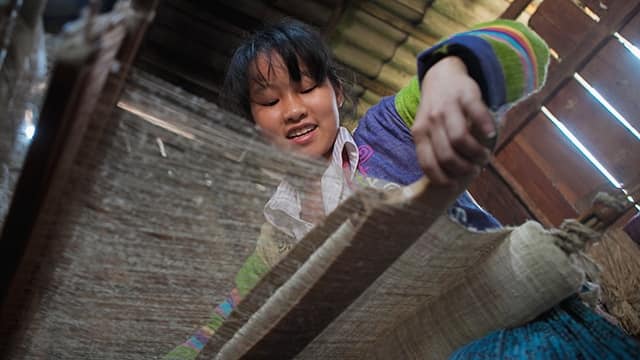
The next day offers a deeper look into H’mong craftsmanship and the skills traditionally passed from one generation of women to the next. You will learn a workshop about the complete process of transforming hemp into fabric, from plant to spinning, weaving, indigo dyeing and decorating the finished cloth. Beyond its practical use, H’mong clothing carries spiritual meaning: traditional patterns are believed to help ancestors recognise their descendants in the afterlife.
Then sit down for a beeswax batik workshop led by Black H’mong women. Using a bamboo pen with a small wax reservoir at the tip, you draw patterns onto white linen traditional H’mong motifs, or your own designs if you prefer. Your host then dips the cloth in indigo dye: where the wax was, white patterns appear against a deep blue background, leaving with a meaningful piece made by your own hands – A beautiful gift to bring home.
You will also step inside traditional H’mong houses to understand how their design reflects family life, customs and beliefs. Local artisans will then introduce you to bamboo weaving, showing how plants gathered from nearby forests become baskets and practical household objects.
From the handicraft workshop, trek through the surrounding landscape to a sacred cave (Ta Phin cave) where local families come to ask for blessings and pray for children recovering from illness. This visit offers another perspective on the spiritual beliefs that remain closely connected to everyday life in the mountains.
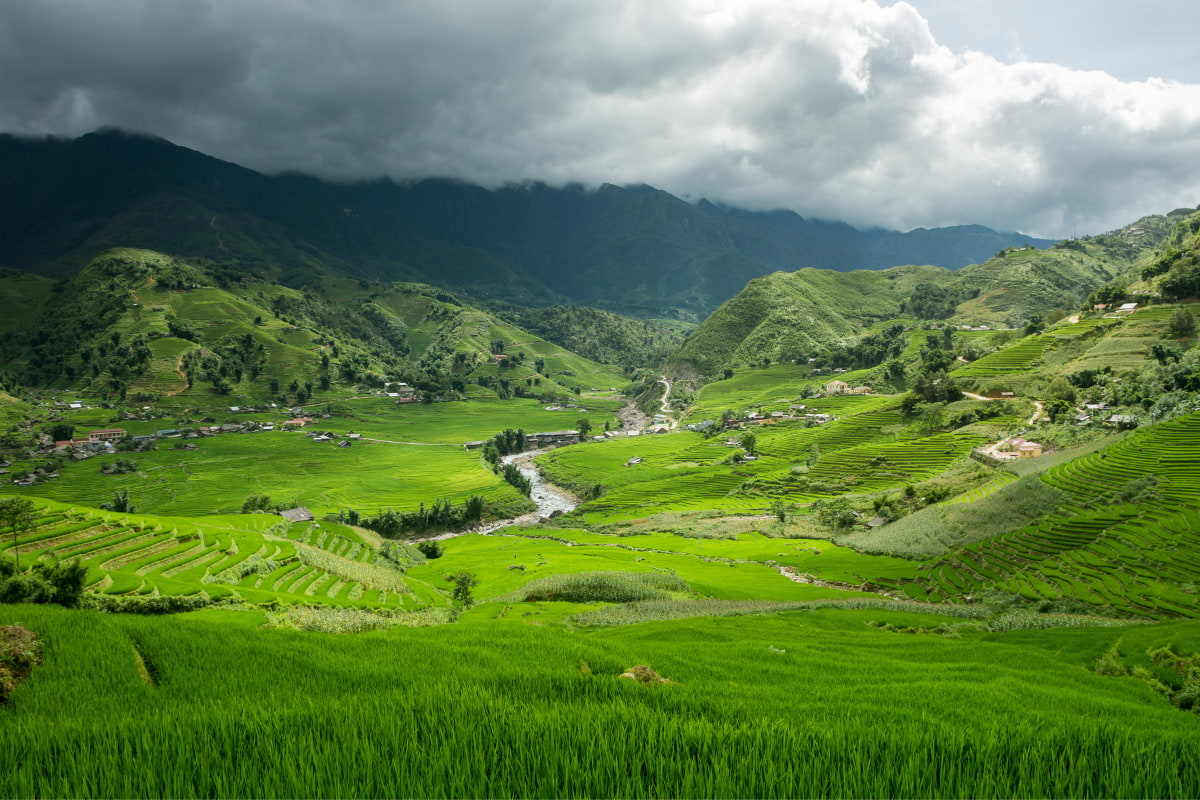
On your final morning in Sapa, enjoy breakfast with your hosts before trekking to Trung Chải Village. The route will be selected according to the weather and your preferences. Home to the Red Dzao and H’mong communities, Trung Chải is surrounded by an exceptional mountain landscape. Enjoy a picnic lunch along the trail before meeting your driver in the village for the onward journey to Bản Liền. (Lien Village)
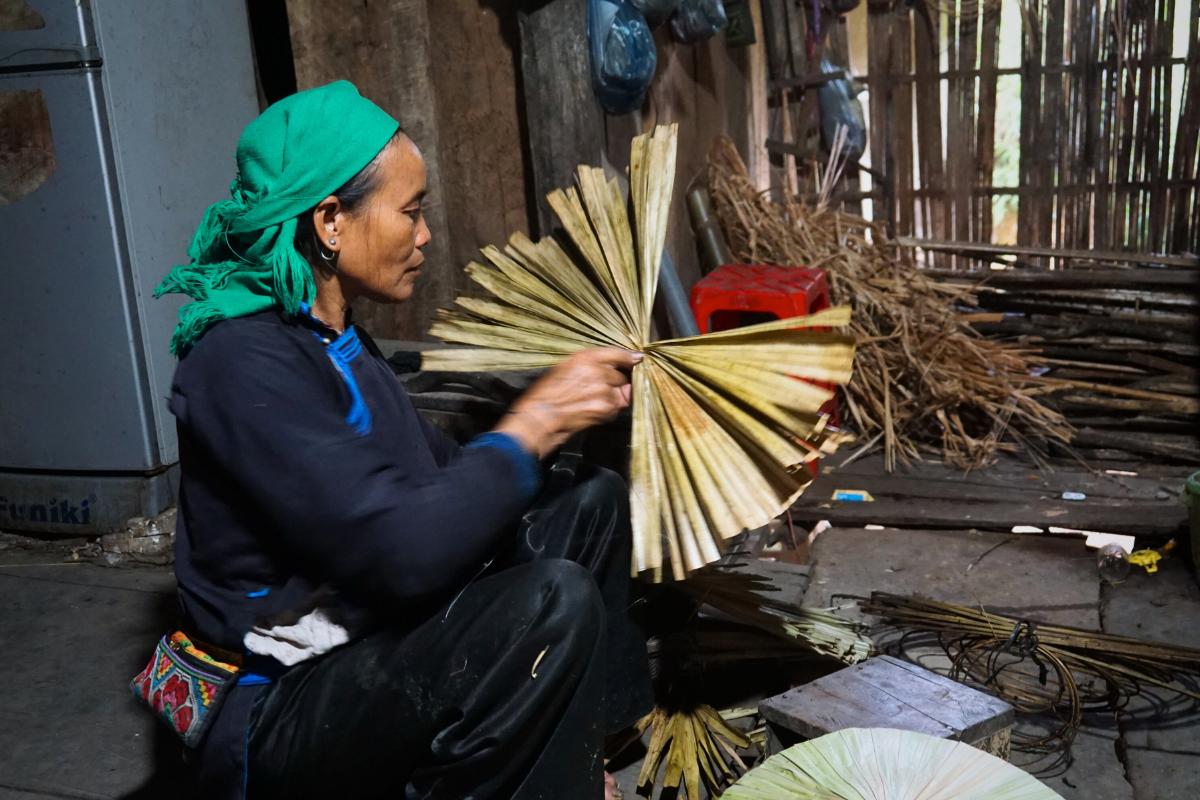
Tay village traditions, mountain tea and market visit
In the remote village of Bản Liền, you will experience the peaceful rhythm of life in a Tày community surrounded by forested hills, rivers and tea plantations. The cool mountain climate and clean air create ideal conditions for tea cultivation, while local families continue to process the leaves using traditional methods that preserve their natural flavour.
Choose between a walk through the village and tea-covered hills or a hands-on workshop with a local Tày woman. Learn how to make a traditional conical hat from palm leaves, craft bamboo chopsticks and discover more about Tày culture through the stories shared during the workshop.
Village life also takes you outdoors. Walk down to the river and try catching fish by hand, gather seasonal vegetables and herbs from the forest, then return to the homestay to prepare a meal with your host family. These simple shared activities offer a closer understanding of how the community makes use of the surrounding landscape in everyday life.
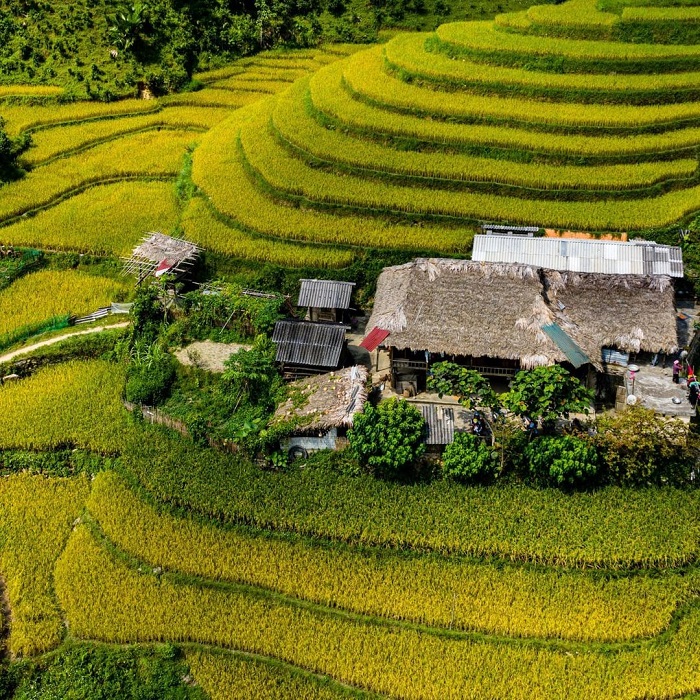
Stilt houses nestled among the terraced rice fields of the local people in Ban Lien. Photo: @la.beaute.bacha
Depending on the day of your journey, in the morning you may have the opportunity to experience one of the region’s traditional highland markets. In Northwest Vietnam, these periodic markets are more than places for buying and selling. On market days, people from different ethnic communities travel across mountains and valleys, often wearing their colorful traditional clothing, to trade, eat, meet friends and exchange local news.
A few hours at the market offers a natural introduction to highland life through its regional food, agricultural products, handmade textiles and everyday conversations. Each stall and gathering place reveals something about the customs, livelihoods and relationships connecting the surrounding communities.
The market will be selected depending on your staying date within the week: Cốc Ly on Tuesday, Sín Chéng on Wednesday, Cán Cấu on Saturday or Bắc Hà on Sunday.
The rhythm of Dao life among ancient tea hills
After visiting the market in the morning, continue to Xà Phìn in Hà Giang (now part of Tuyên Quang Province), an old Dao village known for its distinctive moss-covered houses. These traditional homes develop a thick layer of green moss over the years, giving the village its unique character. Surrounded by beautiful rice terraces and forests of century-old Shan Tuyết tea trees, Xà Phìn offers a remarkable combination of cultural heritage and mountain scenery.
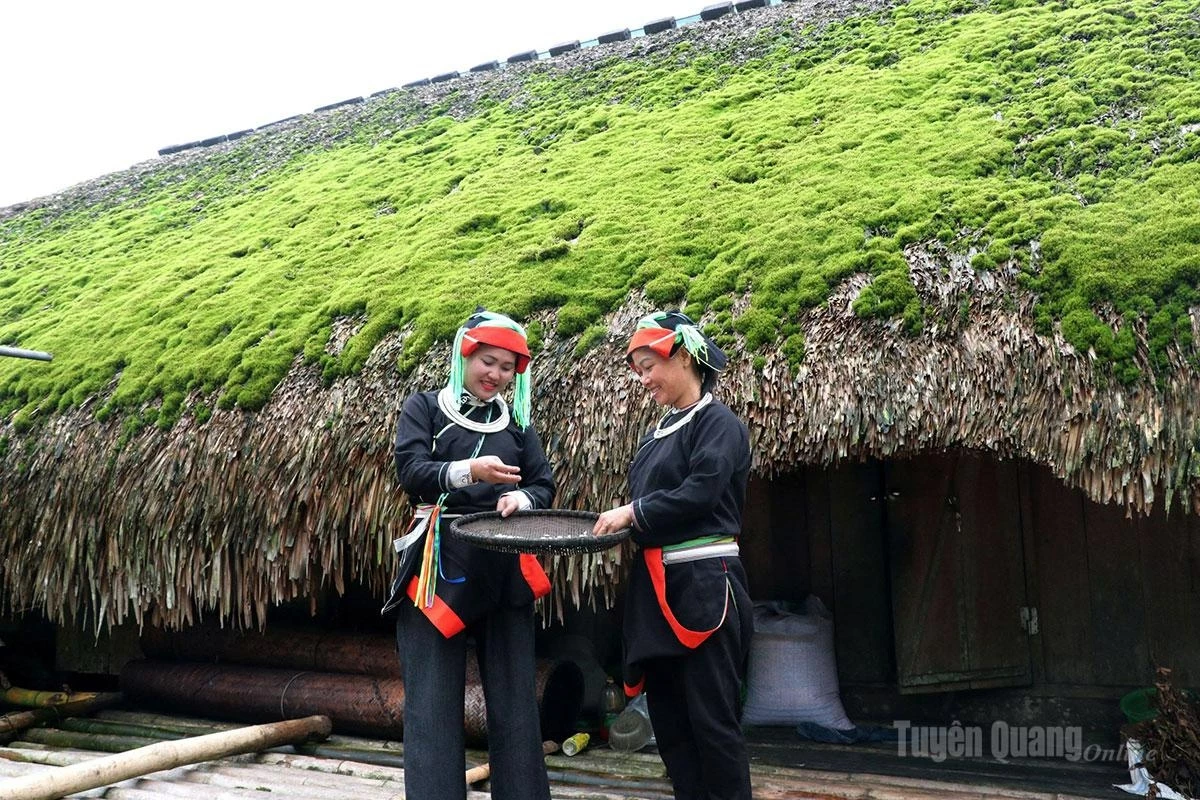
A house in Xa Phin village in Ha Giang (Tuyen Quang). Photo by Tuyen Quang online
Here, you can share a meal with Mr Háu, a village shaman (subject to his availability), and learn about his spiritual role and life within the community. You will also visit his traditional house, distinguished by a roof naturally covered in green moss, a feature that blends beautifully into the cool mountain surroundings. Check into your homestay, then enjoy a pleasant walk through the village before dinner.
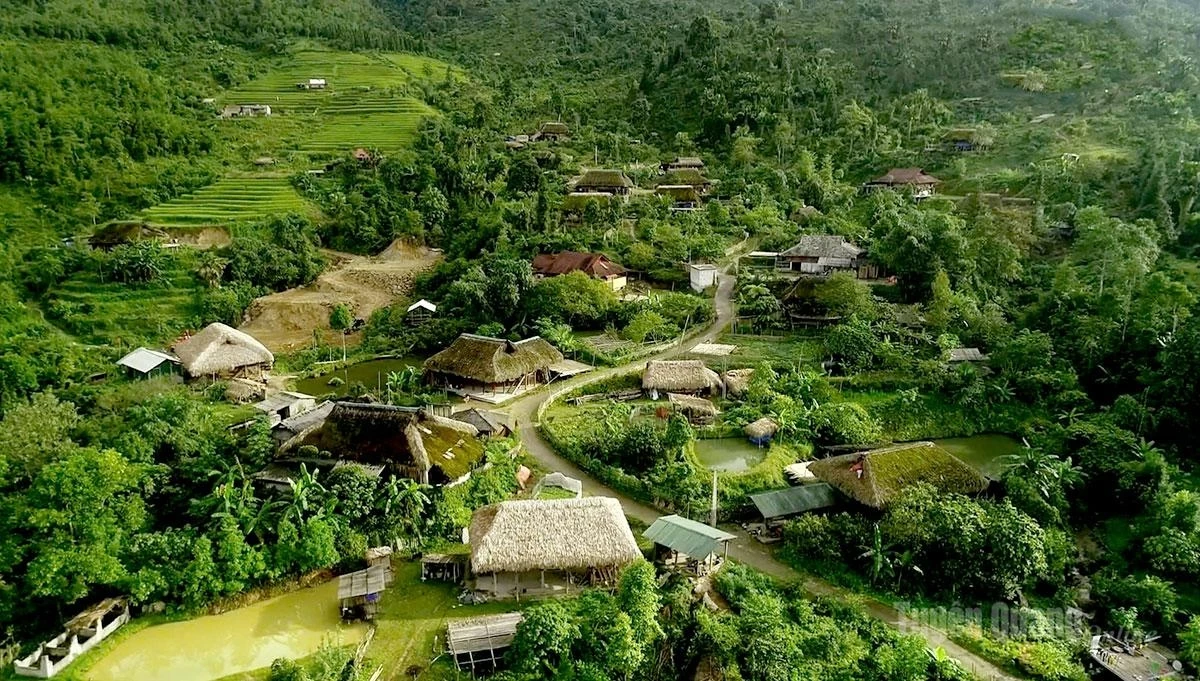
Overview of Xa Phin village in Ha Giang (Tuyen Quang). Photo by Tuyen Quang online
On the day after, explore the mountain surroundings on a trek to a nearby waterfall, passing streams, bamboo forests and terraced rice fields. Or depending on the season, you can instead join a tea workshop to learn how the leaves of ancient Shan Tuyết trees are harvested and processed using local methods. You will be explained the production process of the ancient Shan Tuyet tea, which is recognized as part of the national heritage. Return to Xà Phìn for lunch with a Dao family before continuing to Nậm Đăm, another Dao village surrounded by the impressive landscapes of Hoàng Su Phì.
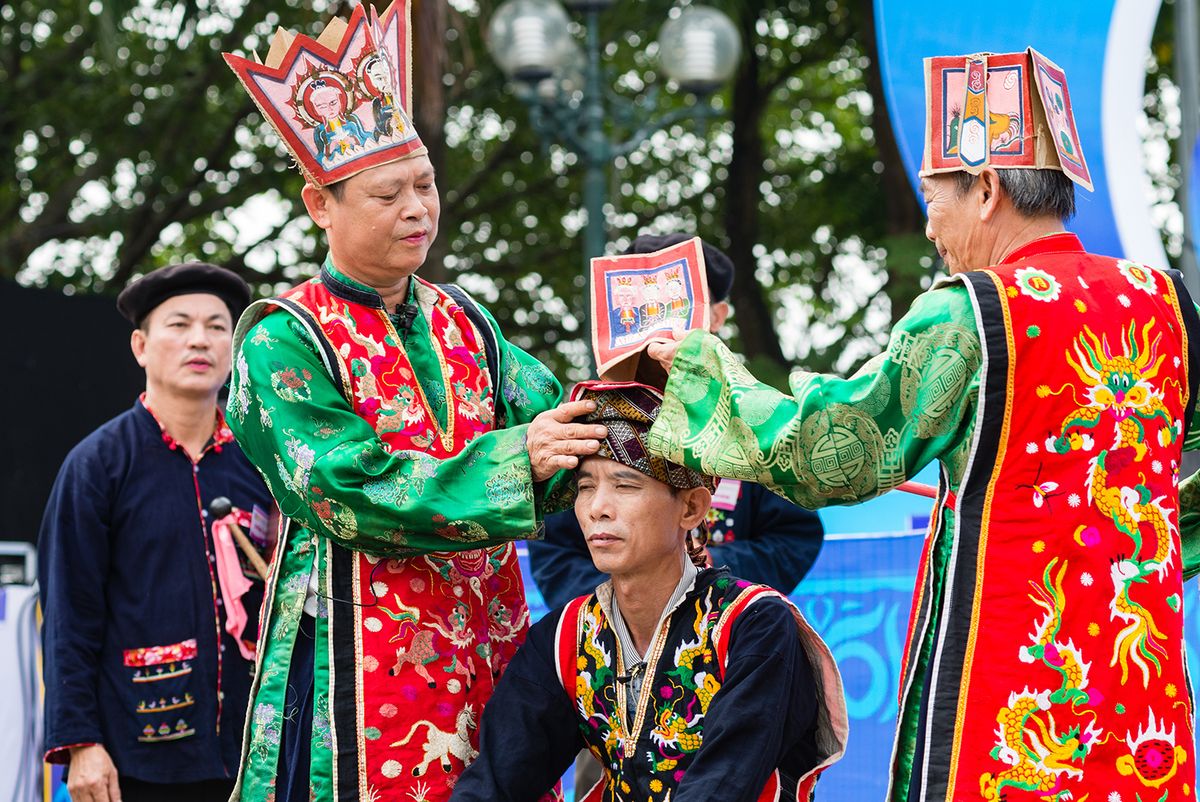
Cấp Sắc Show – Red Dao coming-of-age ceremony
Depending on local availability, you may attend a cultural presentation introducing the Cấp Sắc, an important Dao coming-of-age ceremony through which a man is formally recognised as an adult and a member of the community. Traditional dances and fire-jumping rituals may also be presented, offering insight into the spiritual beliefs of the Dao people. In the evening, join your host family in preparing dinner, then share the meal and local rice wine before spending the night in the village.
Local H’mong communities & Tay’s heritage across the Đồng Văn Karst Plateau
The next day, you will visit the Đồng Văn Karst Plateau which brings together some of Hà Giang’s most dramatic scenery and important expressions of H’mong heritage. Pause at Thẩm Mã Pass to admire the winding mountain road, then meet H’mong artisans in Cán Tỷ village and learn about local weaving technique. In Lao Xa, visit a family workshop where silver smithing skills have been passed down through generations. See how artisans shape and engrave jewellery by hand, while learning why silver is closely connected to H’mong celebrations, marriage and family identity.
The cultural journey continues at the Vương Family Palace, often known as the “H’mong King’s Palace.” Once the residence of Vương Chính Đức, an influential H’mong leader, the century-old complex offers insight into the history, architecture and social structure of the region. Further north, climb Lũng Cú Flag Tower for wide views across the mountains near the Vietnam-China border before returning to Đồng Văn for a peaceful night at Dinh Đá H’mong Karst Plateau Lodge.
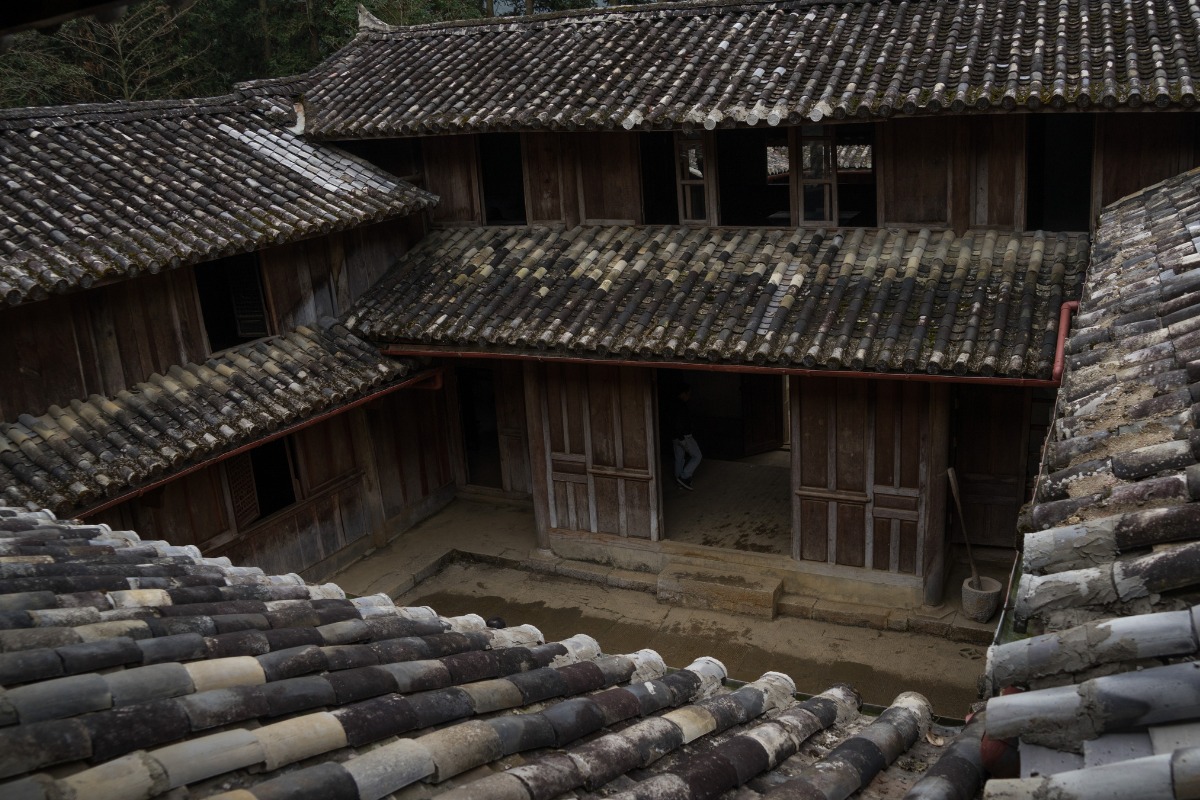
A corner in H’mong King’s Palace.
Spend another day discovering the quieter side of Đồng Văn, beginning with its historic old quarter and local market. If your visit falls on a Sunday, you will experience the market at its largest and liveliest, as people from surrounding ethnic communities gather to trade, eat and socialise.
From Đồng Văn, enjoy a gentle 5 to 6 km trek to Thiên Hương, a secluded village set within the rocky mountains. The village is home to Tày, Nùng and Giáy families, with the Tày forming the largest community. Through its traditional houses, cuisine, clothing and everyday customs, Thiên Hương offers a closer look at cultural traditions that local families have preserved across generations. At the entrance to the village stands an impressive group of ancient banyan trees, which are estimated to be between 700 and 750 years old. Their broad canopies create a cool, peaceful space amid the surrounding limestone landscape. After exploring the village, trek back to Đồng Văn for lunch.
In the afternoon, travel across Mã Pí Lèng Pass, where steep limestone mountains rise above the Nho Quế River. Descend to the water for a boat journey through Tu Sản Canyon, experiencing the scale of the karst plateau from an entirely different perspective. Continue to Mèo Vạc to stay at a mountain lodge.
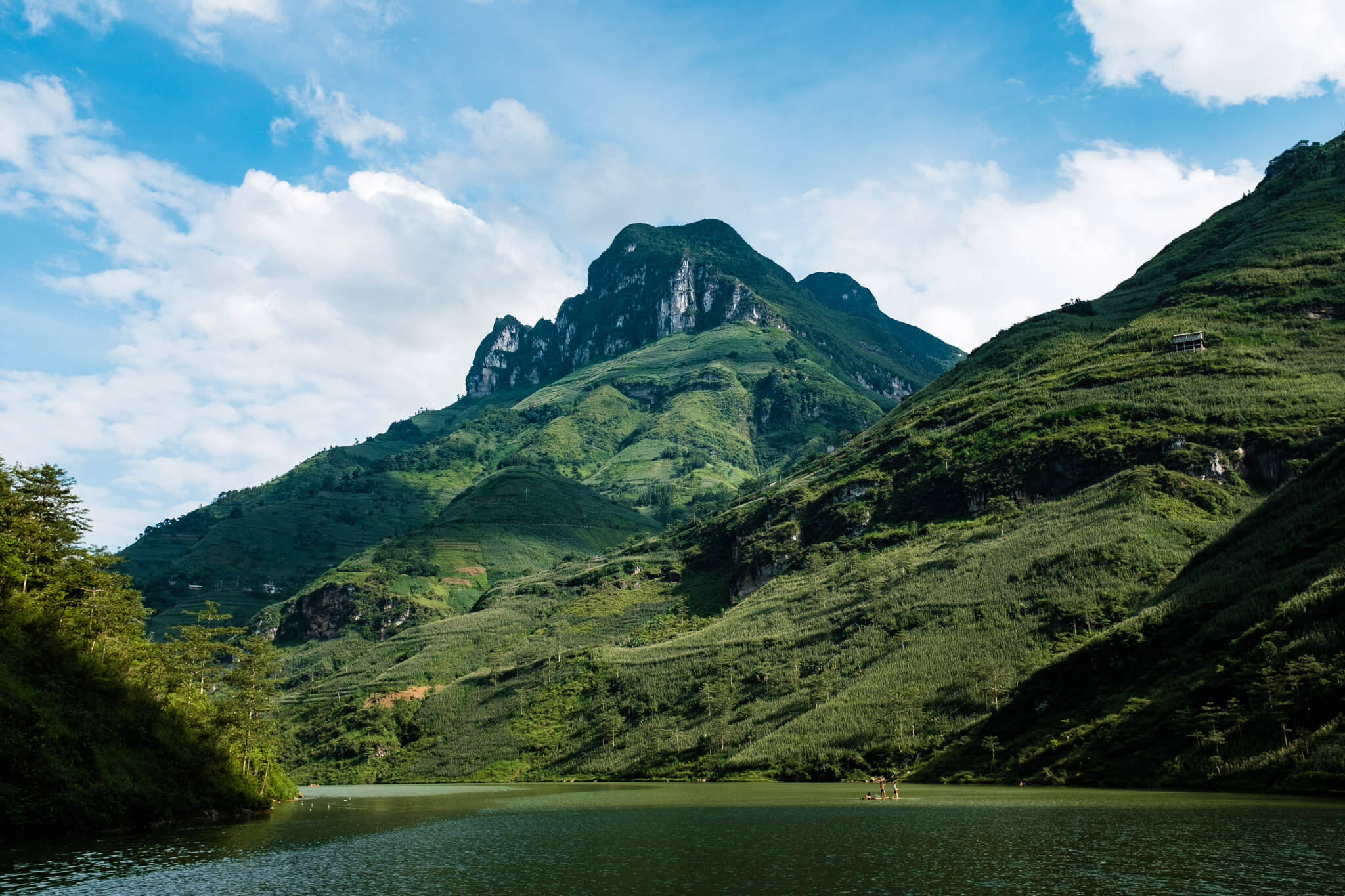
The experience also introduces you to the Lô Lô community through lunch at a traditional Lô Lô Chai village, followed by a gentle walk around the village. Time spent with local families offers a closer look at their distinctive architecture and customs before sharing dinner and staying overnight in the homestay.
Through village cultures and into the wild
Leaving Hà Giang behind, the journey gradually shifts from cultural immersion towards the open landscapes and outdoor experiences of Cao Bằng. Mountain roads lead through deep valleys, limestone peaks and remote villages inhabited by Lô Lô, Tày and Nùng communities. The days ahead bring more opportunities for walking, fresh mountain air and time surrounded by nature.

Enjoy the picturesque scenery of Cao Bang
The road towards Cao Bằng then crosses Khau Cốc Chà Pass, known for its 15 sharp bends. A short walk leads to a viewpoint over the winding road before continuing through Xuân Trường Valley and Nà Tềnh Pass.
In Cao Bằng, history and nature come together at Pác Bó, near the Chinese border. Walk through the forest to the clear waters of Lê Nin Stream and Pắc Bó Cave, where Hồ Chí Minh lived and worked after returning to Vietnam. Later, explore the peaceful valley beneath Mắt Thần Mountain, also known as Angel Eye Mountain. You may walk across the grasslands or simply enjoy a refreshment while taking in the limestone scenery and fresh air.
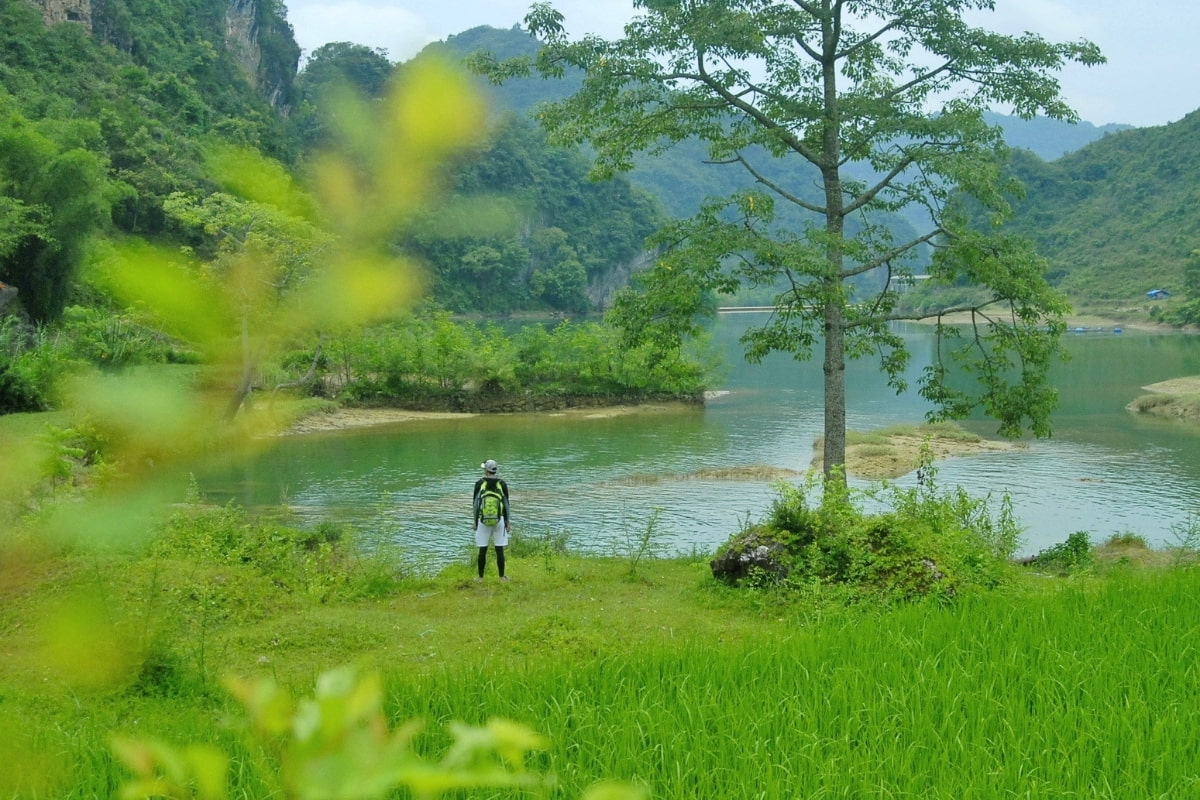
Thang Hen Lake system
Continue on foot towards the peaceful Thang Hen lake system. Surrounded by forested limestone peaks, the trails reveal a quieter and greener side of northern Vietnam. The experience ends in Khuổi Ky, an ancient stone village inhabited mainly by Tày families. Its distinctive stone stilt houses reflect both local building traditions and the community’s close relationship with the surrounding mountains.
Discover Nùng An craft villages
The following day combines Cao Bằng’s best-known natural landmarks with the traditions of the Nùng An people. The landscape becomes even more impressive around Trùng Khánh. Venture inside Ngườm Ngao Cave, where limestone formations extend deep beneath the mountains, then enjoy panoramic views from Phật Tích Trúc Lâm Pagoda before approaching Bản Giốc, Vietnam’s largest natural waterfall. Surrounded by forested limestone peaks, the falls are one of the defining landscapes of Cao Bằng.
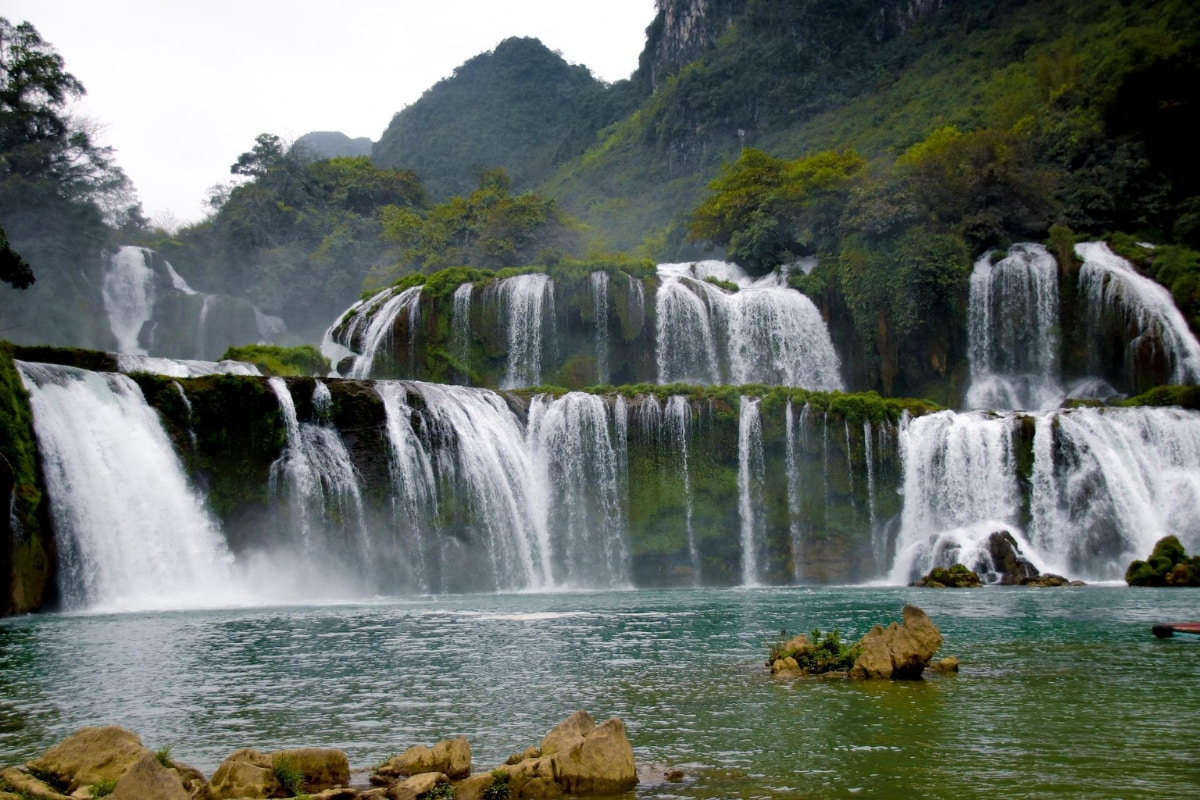
Continue to Phia Thắp, an old Nùng An village known for its traditional incense-making craft. Local artisans will guide you through the process, from preparing natural forest ingredients and colouring bamboo sticks to drying the finished incense in the sun.
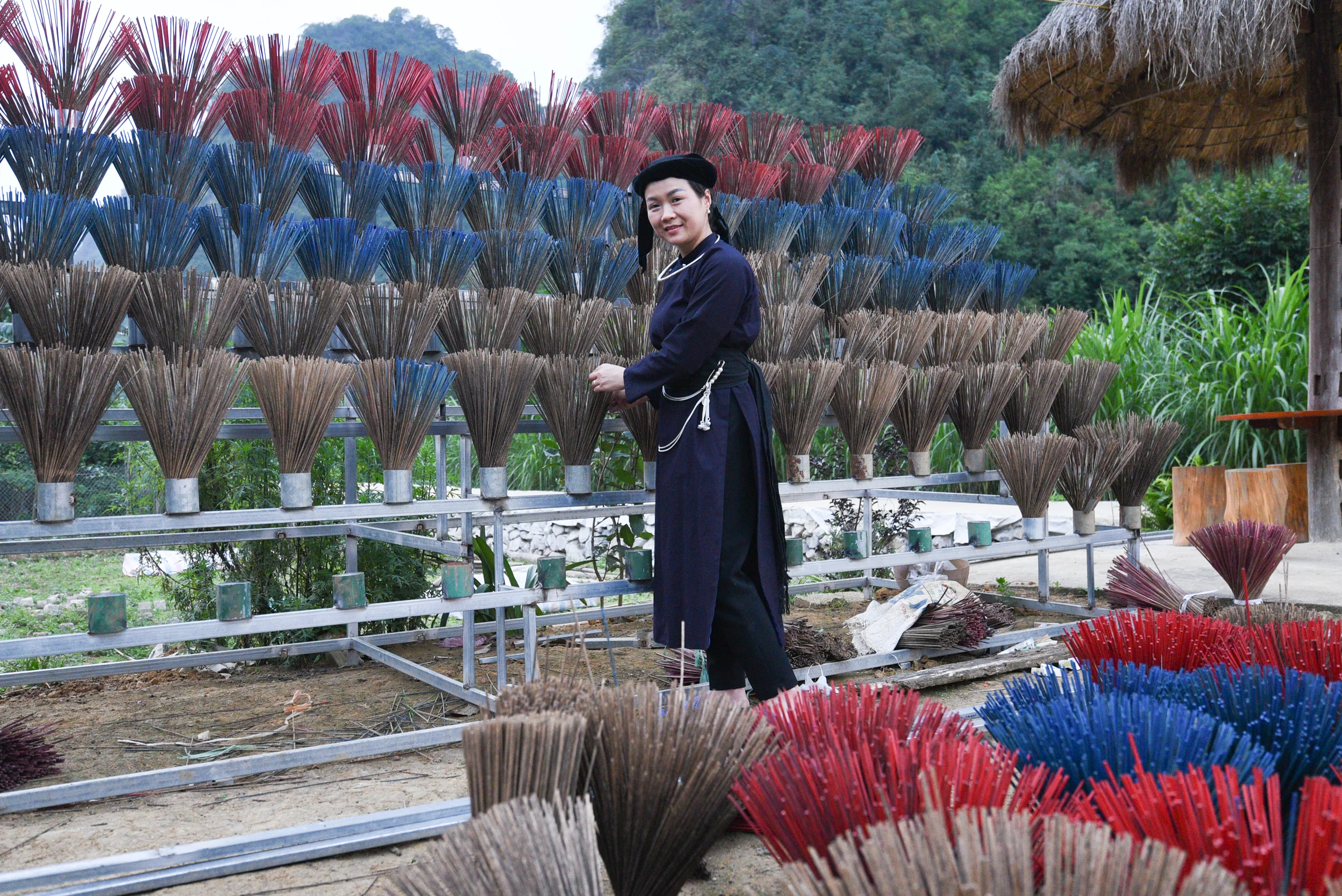
A Nung An person in Phia Thap village. Photo by nongnghiepmoitruong
You can also have chances to visit Phúc Sen, a Nùng An village where families have practised traditional blacksmithing for generations. Continue to Dìa Trên village to discover how local artisans produce handmade paper from natural materials using techniques preserved within the community.
Enjoy a slower end to the journey and rest in nature. We travel along the historic Route RC4 towards Lạng Sơn, passing Đông Khê, the site of an important battle during the First Indochina War. Continue into the peaceful countryside of Hữu Lũng for a gentle trip through limestone valleys, rice fields and rural villages.
Rest at your eco-lodge in Hữu Lũng. Then you can cycle through peaceful countryside, secluded villages and limestone landscapes, with the distance and duration adjusted to your preference.
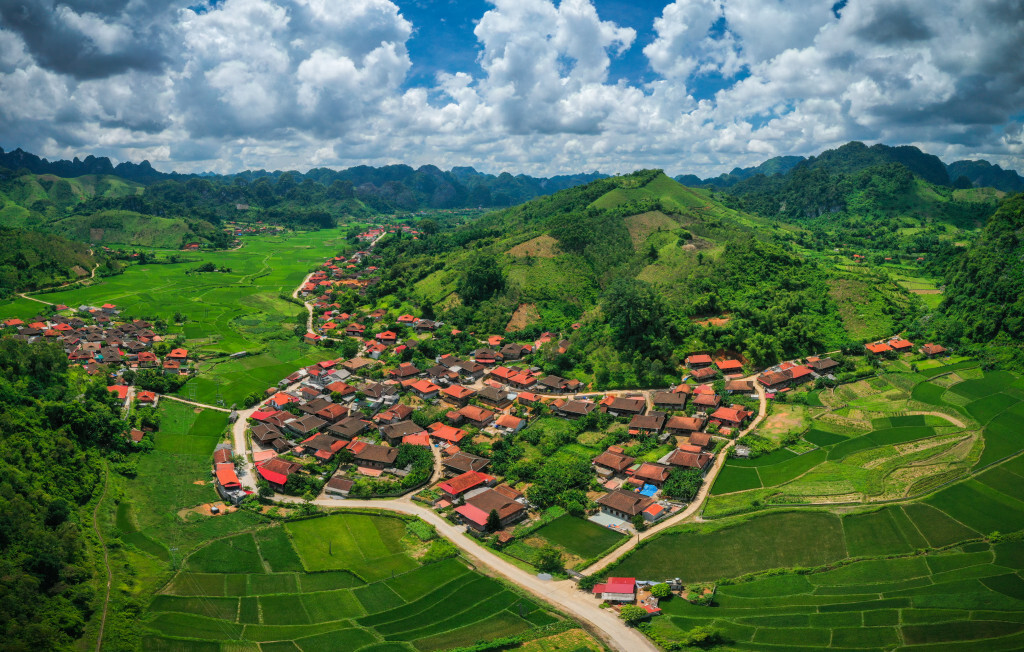
Huu Lung (Lang Son) panorama view. Photo by Nguyen Duy
Alternatively, spend the morning at your own pace. Try stand-up paddleboarding on the lake, swim in the river, do kayaking or simply relax and recover after your journey through Northern Vietnam. Return to the lodge for lunch and some time to pack before travelling back to Hanoi.
A relaxed return to Hanoi
After completing your journey across Northern Vietnam, enjoy a flexible day to rest, revisit your favourite photographs and gather the memories of the places and people you encountered. Each village invites you not simply to observe, but to feel the slower, deeper heartbeat of northern Vietnam.
If you prefer a gentle introduction to Hanoi, your day could look like this:
Explore Hanoi by bicycle at your own pace or choose a relaxed day focused on the city’s food, stories and street life. Taste Hanoi’s creative cuisine with local favourites such as phở cuốn, fresh rice-noodle rolls, and phở chiên, crispy fried rice noodles. Later, wander through the narrow streets of the Old Quarter, where long-established trades and family businesses continue to shape the neighbourhood.
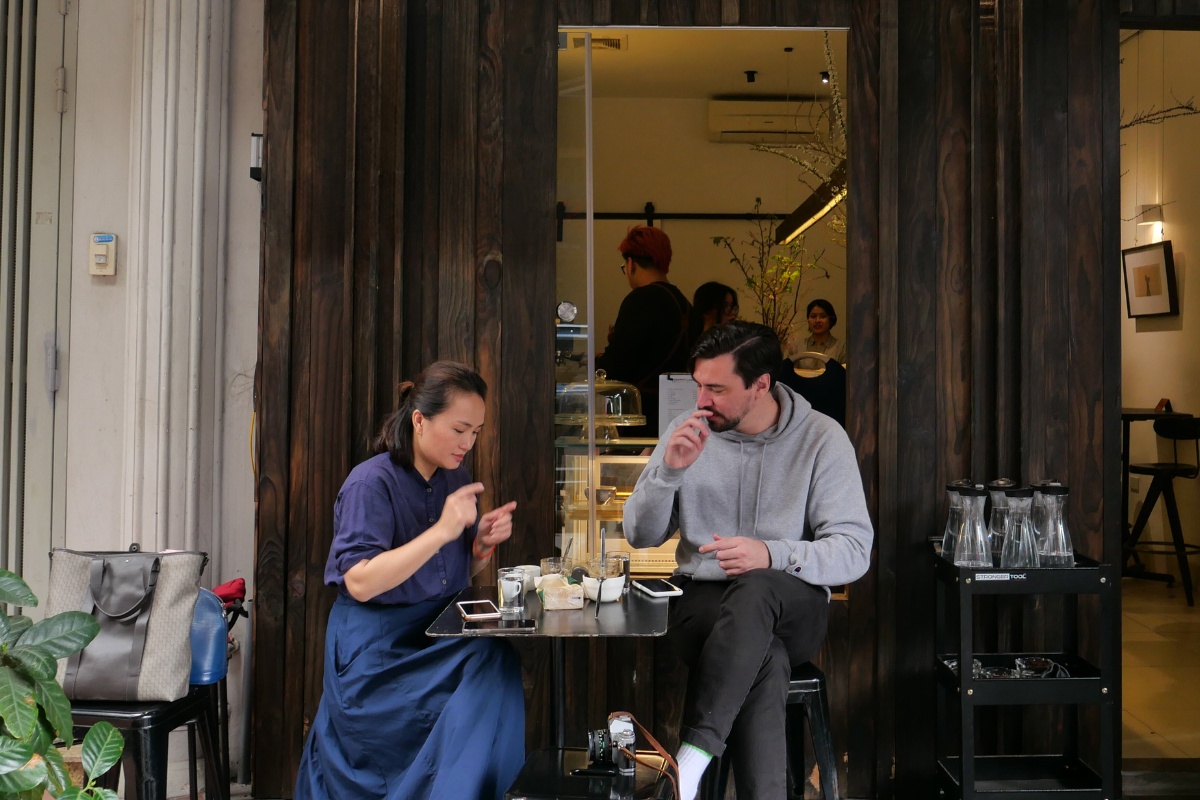
Then, visit Ngọc Sơn Temple and hear the legend of the Returned Sword at Hoàn Kiếm Lake, the historic and spiritual heart of the city. Pause for a rich egg coffee before ending the experience with a one-hour cyclo ride through Hanoi’s lively old streets.
Price per person based on number of people of a private group
This tour is designed for private group operation so the price per person varies by group size.
A deposit is required to confirm your reservations at the time of booking. For overnight stays, the standard arrangement is 2 guests/room. For odd-numbered groups (1, 3, 5, or 7 guests), an extra single supplement will apply.
For longer journeys, rooms, cruises, and transportation tickets are subject to availability and should be booked early during the peak season.
Read more about our payment & cancellation policy
Surcharge for holidays or discount for larger group is available.
Contact our travel consultants regarding the most suitable recommendations for your trips